
AAW sEMG Flex
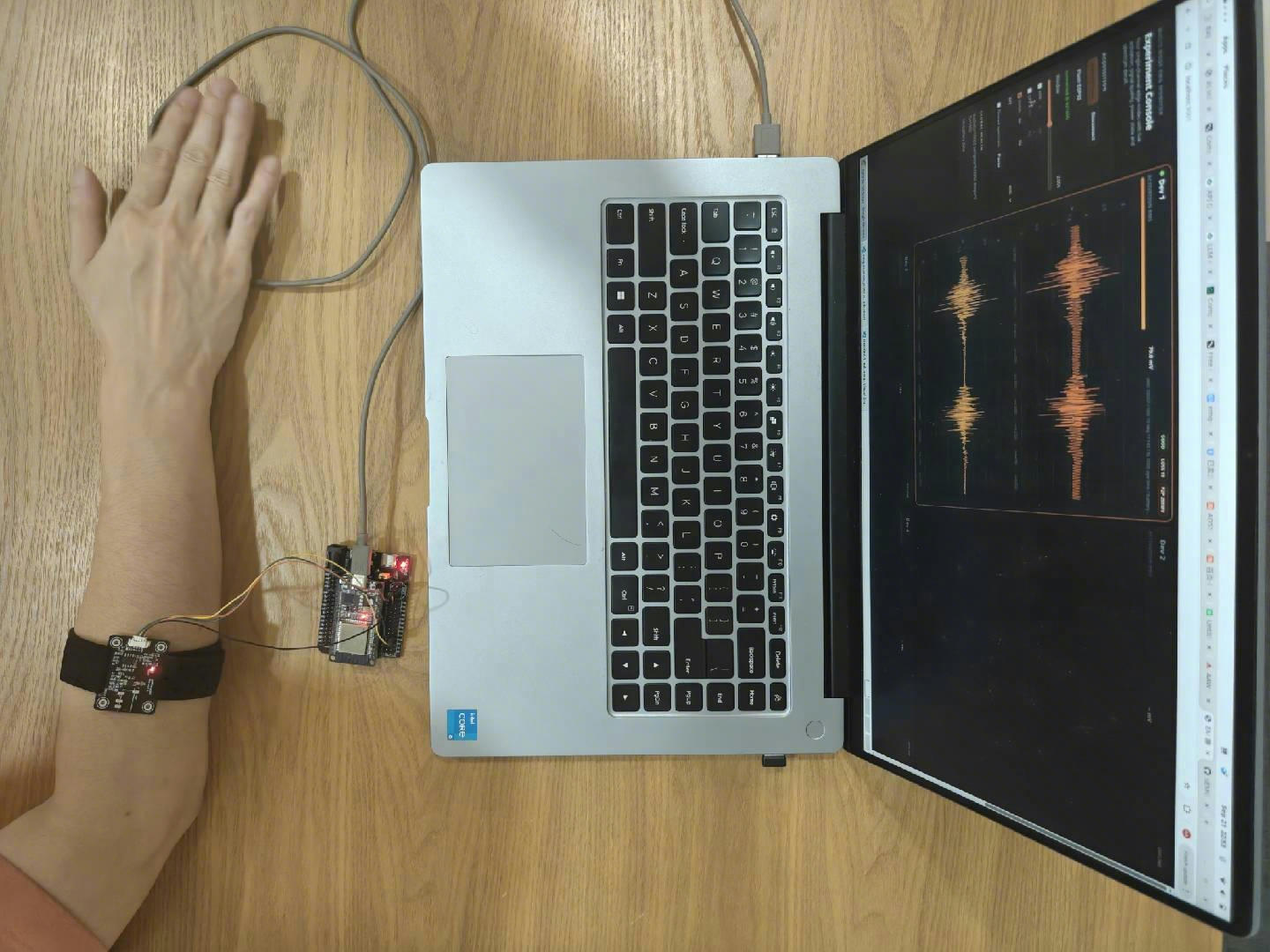
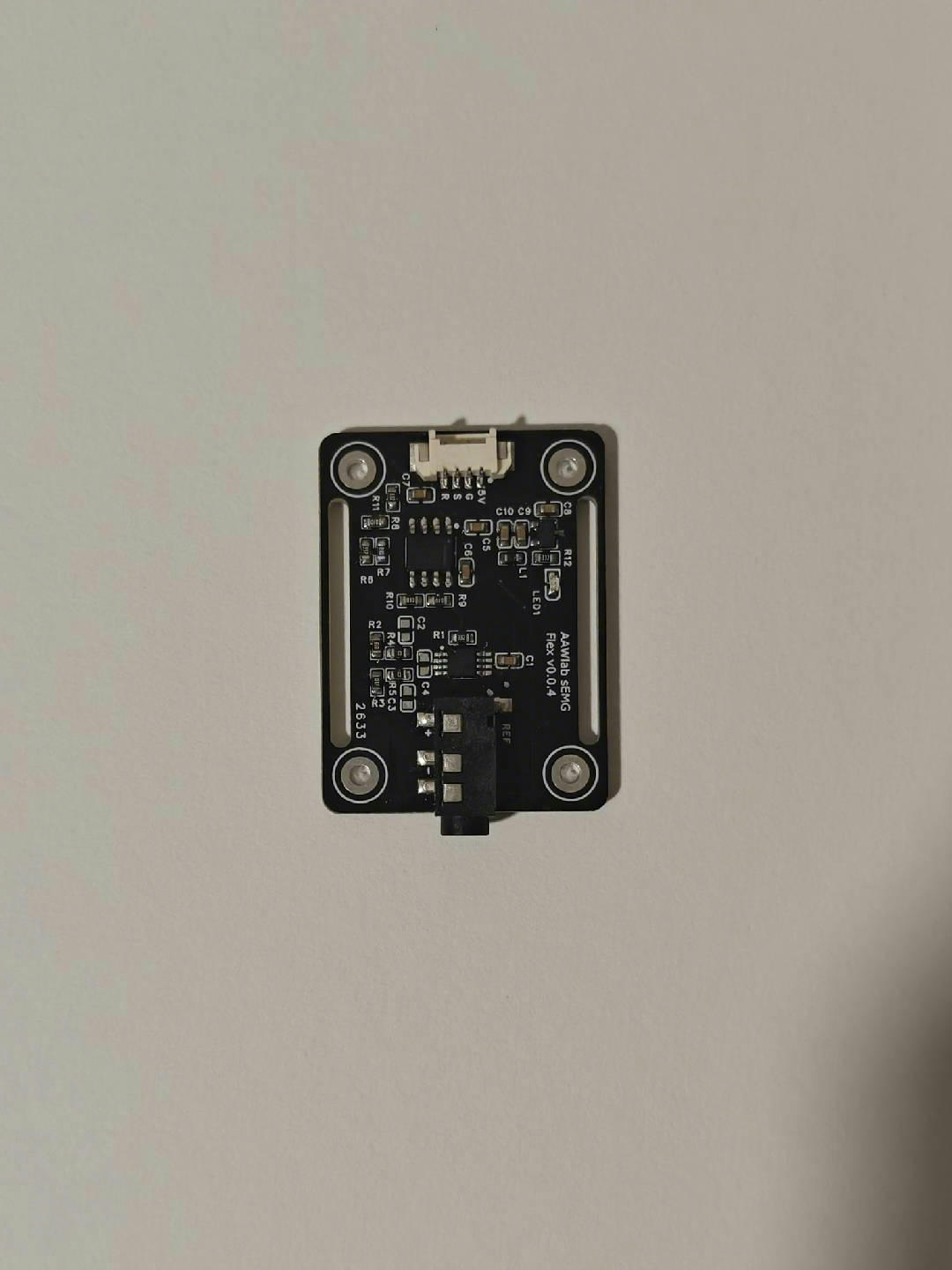
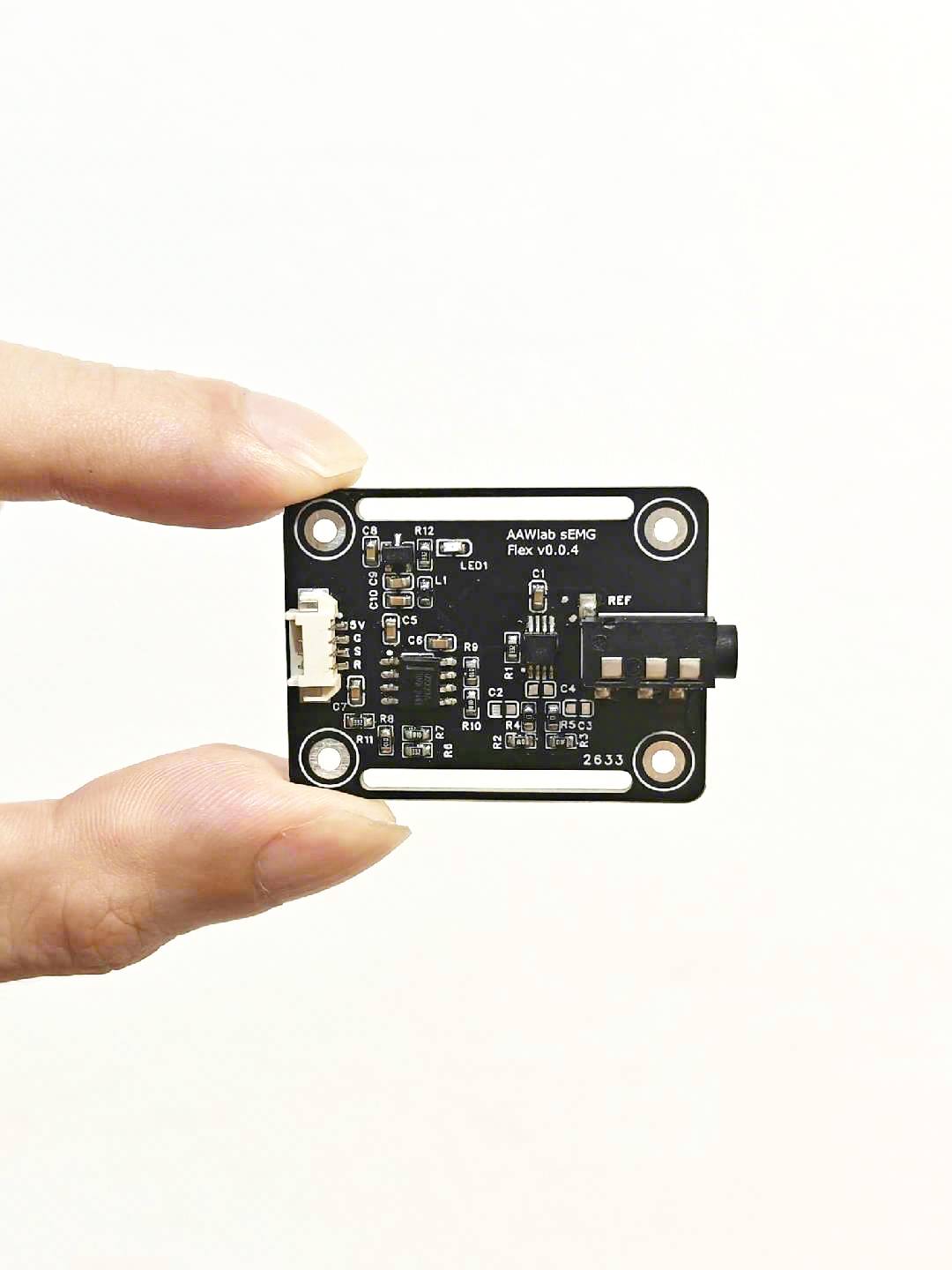
AAW sEMG Flex is an sEMG analog front-end board. It amplifies and filters weak surface EMG signals and outputs an analog voltage on the S pin.
Who it is for
Section titled “Who it is for”- Students, teachers, and developers doing a first EMG experiment.
- Users who want to read analog EMG with Arduino / ESP32 / STM32.
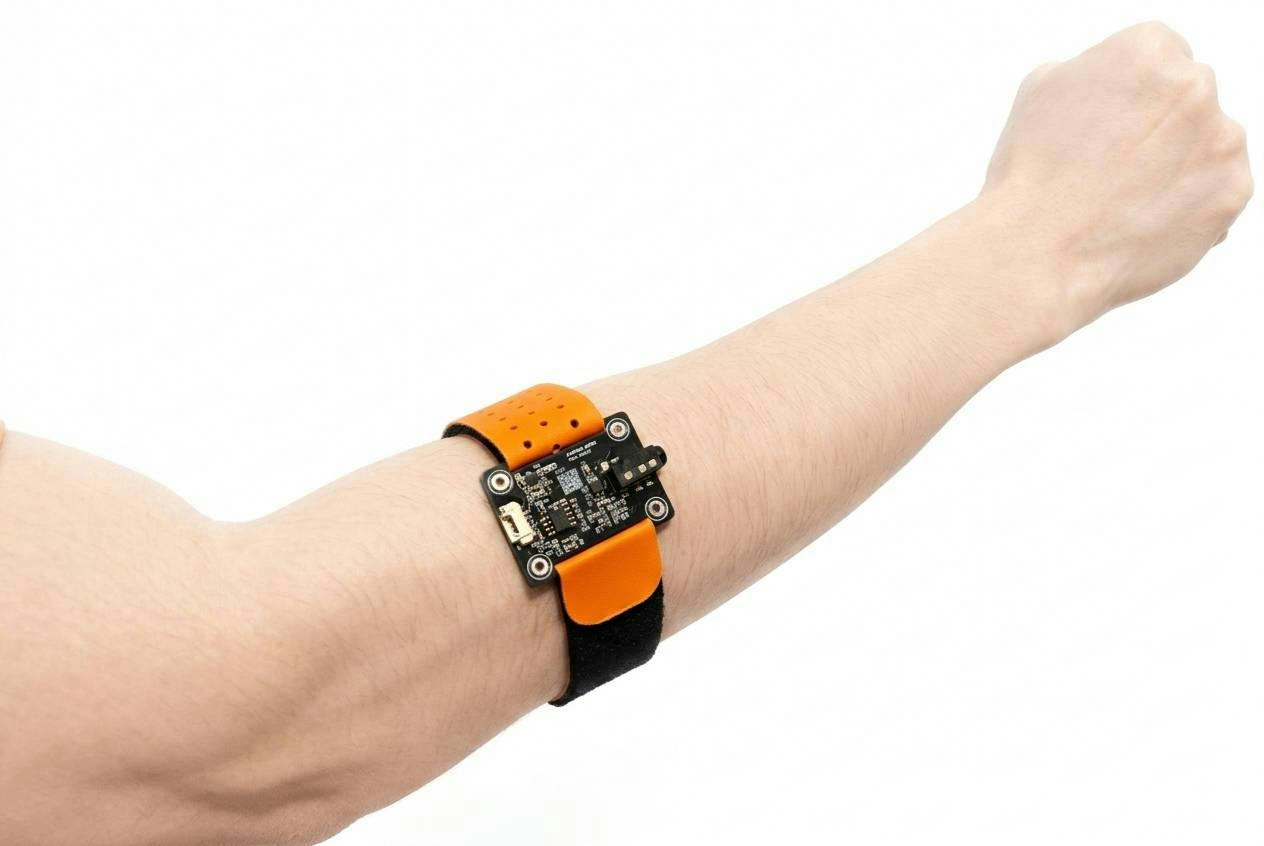
- Users comparing wet electrodes, dry lead electrodes, and onboard dry electrodes.
- People learning analog front ends, ADC sampling, filtering, and serial plotting.
Who it is not for
Section titled “Who it is not for”- Users who want to plug in USB and immediately see waveforms.
- Users who do not want to wire an ADC or flash example firmware.
- Medical diagnosis, treatment, monitoring, or safety-critical use.
Minimal signal chain
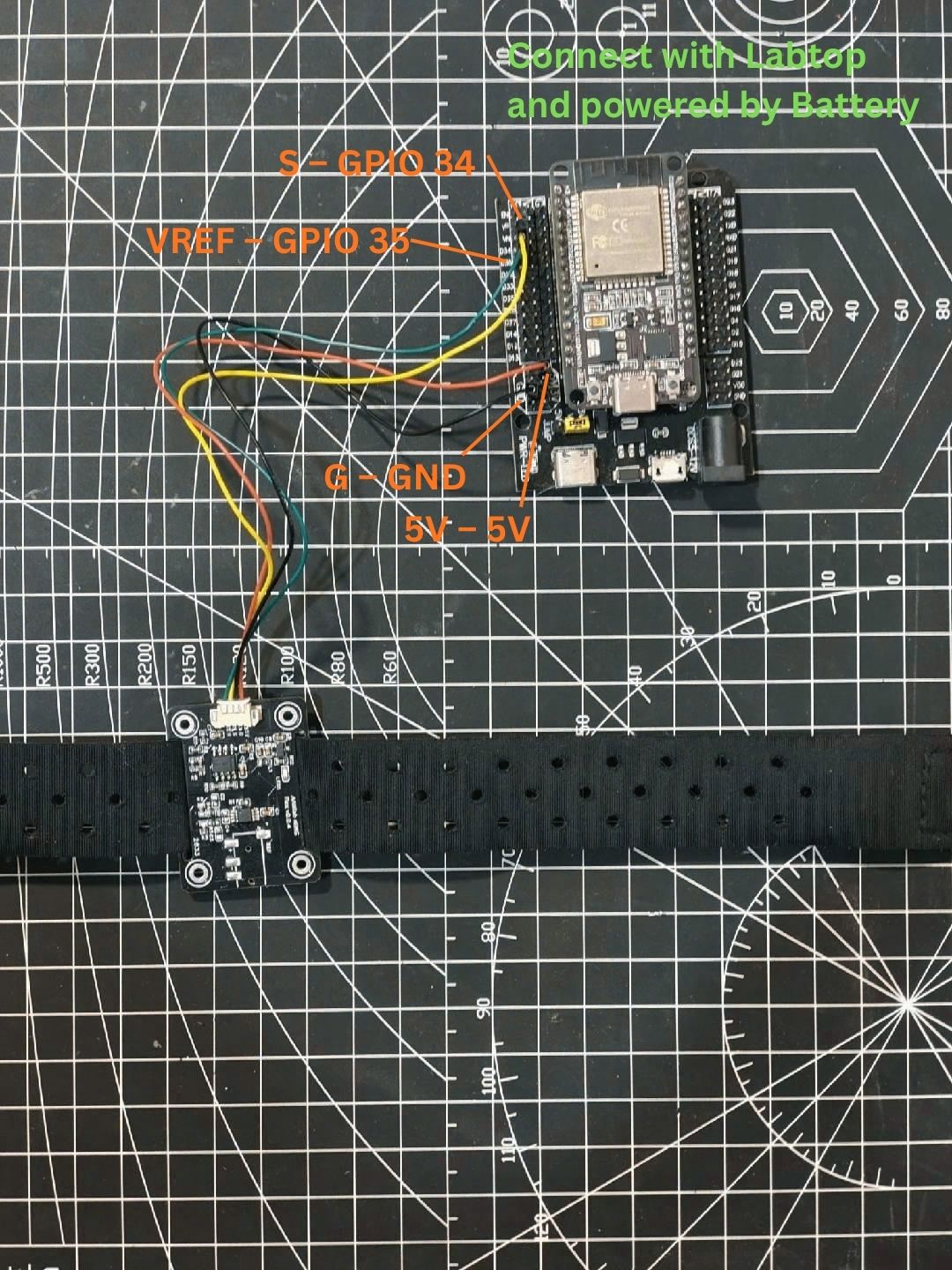
Section titled “Minimal signal chain”electrodes → AAW sEMG Flex → ADC / MCU / oscilloscope → software display| Flex pin | Connect to | Notes |
|---|---|---|
5V |
Low-noise 5 V power |
Battery or isolated power is recommended for first tests. |
G |
ADC / MCU / oscilloscope ground | Common ground is required. |
S |
ADC input | EMG analog output, about 0–3.3 V, centered near 1.65 V. |
VREF / R |
Optional ADC input | Mid-rail reference. For stable analysis, sample both S and VREF. |
In examples, OUT maps to S, VCC maps to 5V, and GND maps to G.
Key specs
Section titled “Key specs”| Item | Value |
|---|---|
| Power | 5 V |
| Output type | Analog voltage |
| Output range | About 0–3.3 V |
| Mid-rail reference | About 1.65 V |
| Default gain | About 1000x |
| Hardware filtering | About 15–500 Hz band-pass |
| Recommended sampling | >= 1000 Hz, minimum 800 Hz |
| Built-in ADC | No |
| USB acquisition | No |
| Size | 40 mm × 30 mm |
| Medical use | No |
Electrode options
Section titled “Electrode options”| Type | Best for |
|---|---|
| Wet electrodes | Controlled scientific measurements and reference tests. |
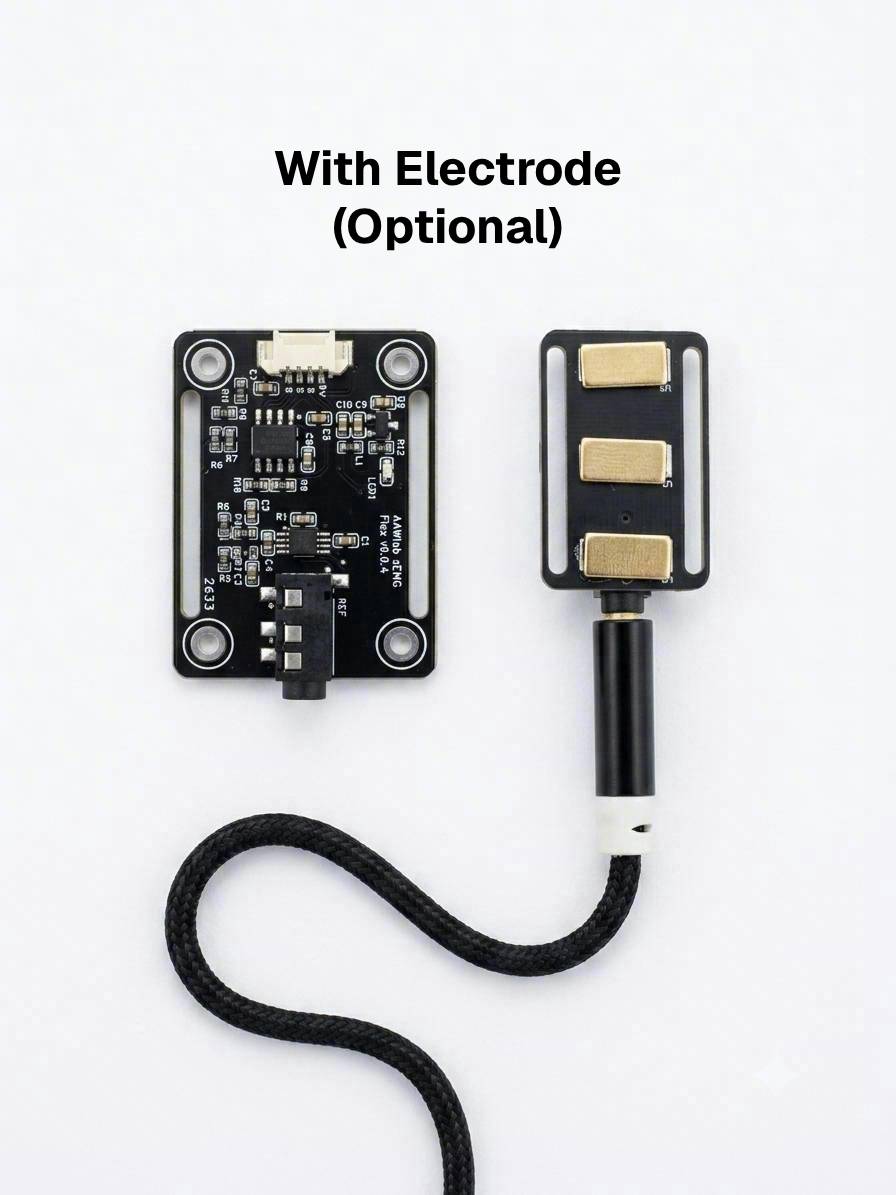
| Dry lead electrodes | Daily exploration, teaching demos, and repeated tests without disposable gel electrodes. |
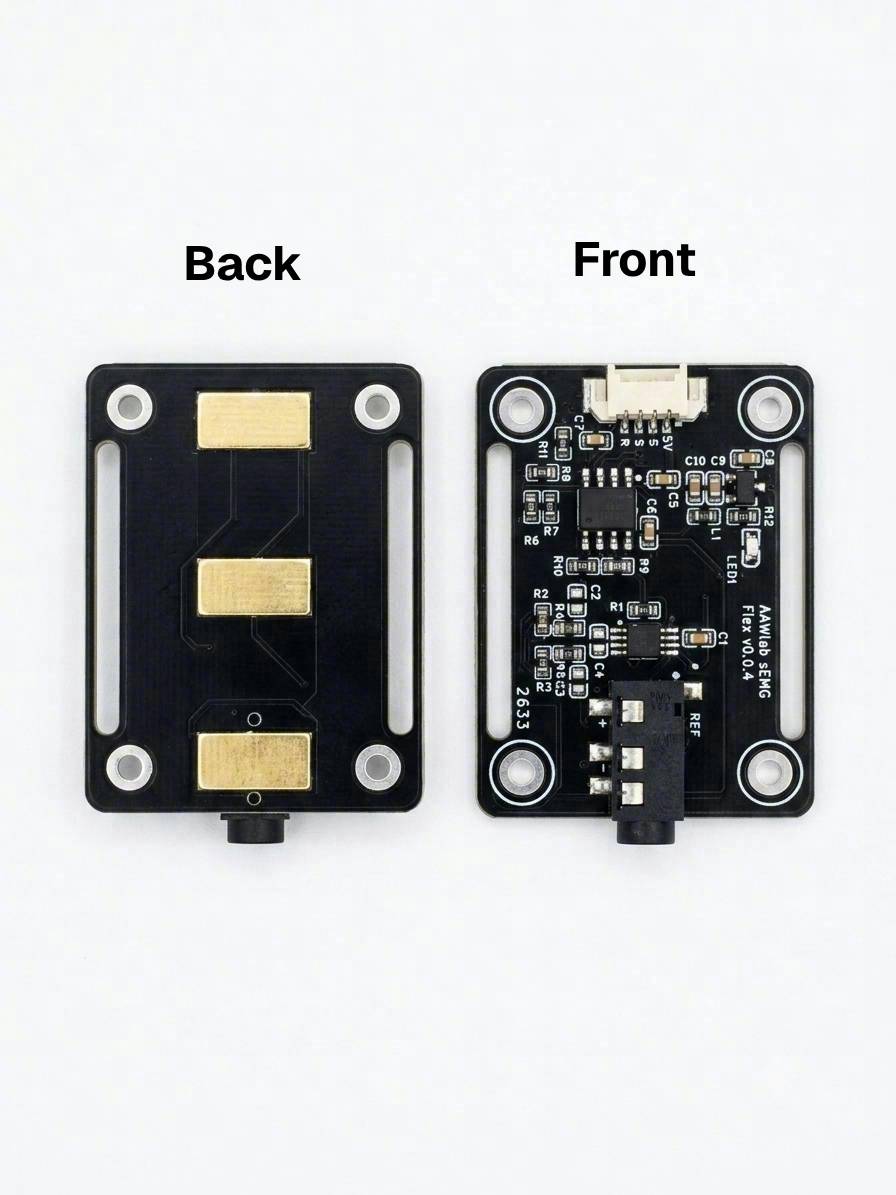
| Onboard dry electrodes | Quick skin contact, structure experiments, and DIY prototypes. |
Quick validation
Section titled “Quick validation”- Power Flex with low-noise
5 V. - Connect
Sto an ADC input andGto acquisition ground. - Use dry electrodes for convenient tests, or wet electrodes for controlled reference measurements.
- Relax, then clench or bend the wrist.
- If waveform energy increases with motion, the main chain works.
Examples
Section titled “Examples”| Example | Hardware | Output |
|---|---|---|
| arduino-analog-teleplot | Arduino | >emg:512, 115200 baud |
| esp32-analog-teleplot | ESP32 | >emg:2048, 115200 baud |
| esp32-emg2-serial-monitor | ESP32 + browser console | EMG2, 921600 baud, 1000 Hz |
| stm32f103-emg | STM32F103 | ADC + DMA |
Why do I see nothing over USB?
Section titled “Why do I see nothing over USB?”Flex does not output USB data. Read the S pin with an ADC / MCU / oscilloscope.
Can I use ESP32 built-in ADC?
Section titled “Can I use ESP32 built-in ADC?”Yes for quick validation. For repeatable analysis, use an external ADC or STM32 ADC + DMA.
Should I sample VREF?
Section titled “Should I sample VREF?”Beginners can start with S only. For stable analysis, sample both S and VREF and compute S - VREF.