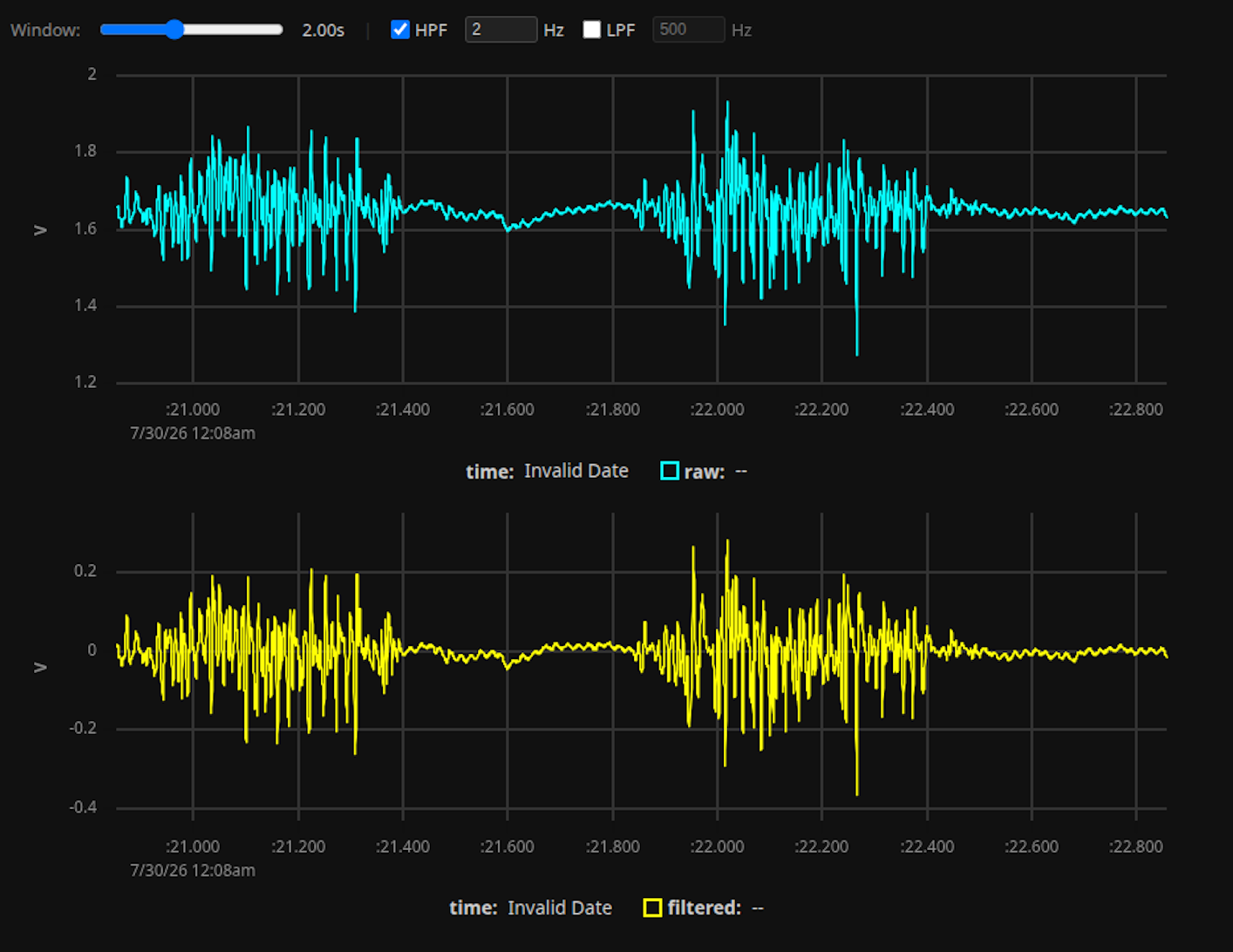
Quick Start
Run a minimum viable sEMG experiment: place wet electrodes, connect the EMG front end to an oscilloscope, or collect data with an MCU plus ADC and print the waveform, then observe the signal change during a hand contraction.
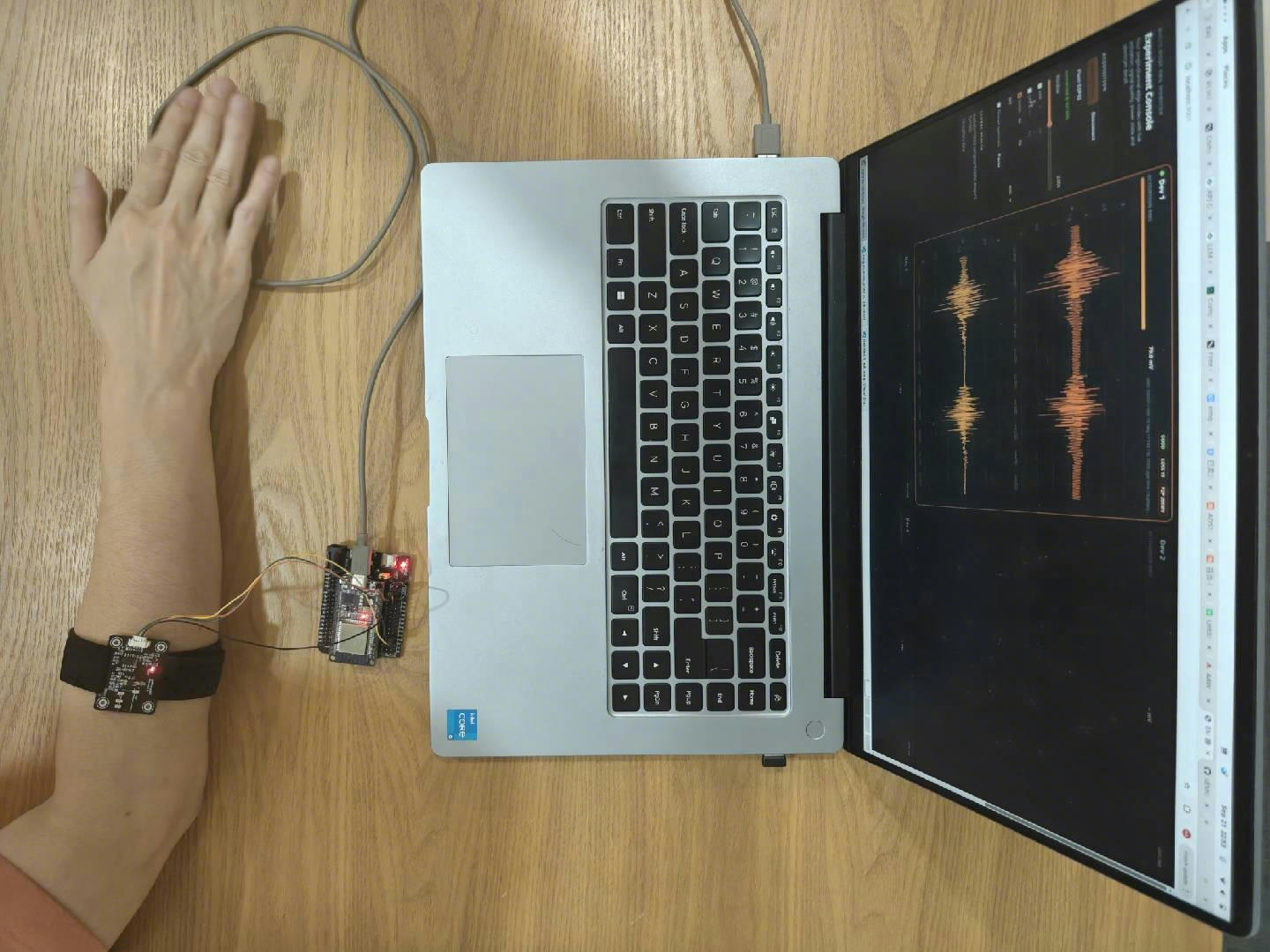
Minimum analog-front-end system: AAW sEMG Flex on the arm, ESP32 DevKit for ADC sampling, and a laptop displaying the waveform.
If you have not bought a module yet, read the Buying Guide first.
What You Need
Section titled “What You Need”For AAW sEMG Wireless:
- AAW sEMG Wireless edge device with onboard dry electrodes.
- AAW sEMG Wireless dongle.
- Battery power.
- A computer browser for console.aawlab.com.
For AAW sEMG Flex, AAW sEMG Mini, or another analog front end:
- The sEMG analog front-end module.
- Three electrode leads and disposable wet electrodes for the first test.
- Battery power or another low-noise isolated supply.
- An oscilloscope, or an MCU plus ADC that can sample and print the waveform.
Basic Workflow
Section titled “Basic Workflow”For AAW sEMG Wireless:
- Power the edge device and plug the dongle into your computer.
- Press and hold the BOOT button on the edge device and dongle for about three seconds to pair them.
- Place the onboard dry electrodes against the target forearm muscle group.
- Open console.aawlab.com in a computer browser.
- Relax your arm and observe baseline noise.
- Make a fist or bend your wrist and check that waveform amplitude increases.
For AAW sEMG Flex, AAW sEMG Mini, or another analog front end:
- Power the EMG front end with a low-noise isolated supply.
- Connect the EMG output to an oscilloscope, or to an ADC input on your MCU.
- Place three wet electrodes near the forearm muscle group.
- View the waveform on the oscilloscope, or print ADC samples from your MCU and plot them.
- Relax your arm and observe baseline noise.
- Make a fist or bend your wrist and check that waveform amplitude increases.
Wiring Diagram
Section titled “Wiring Diagram”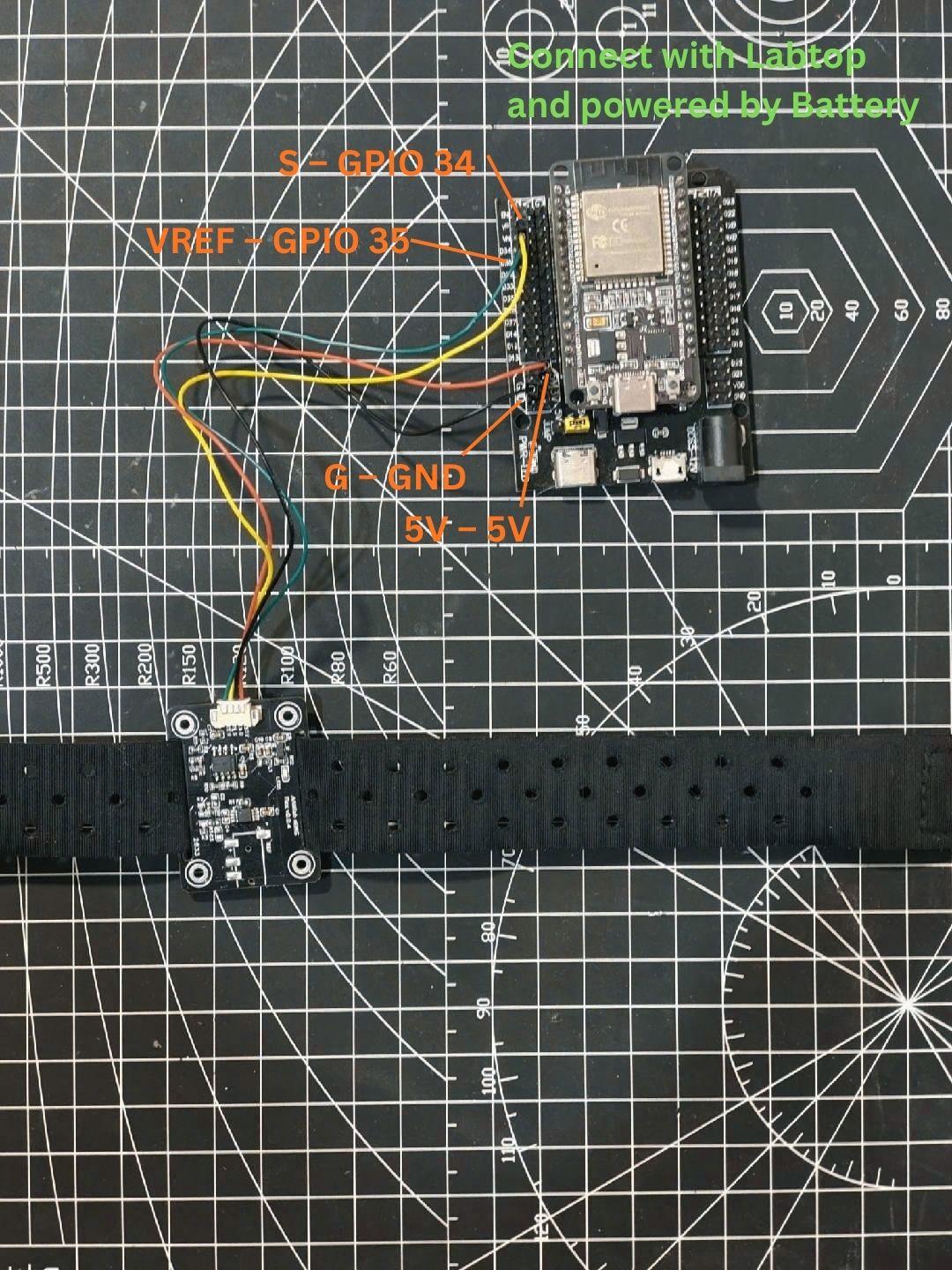
Recommended wiring example: AAW sEMG Flex analog front end connected to an ESP32 DevKit for ADC sampling.
For an ESP32 DevKit, wire it as shown in the photo. You can flash the ESP32 from a computer browser on console.aawlab.com.
| AAW sEMG Flex | ESP32 DevKit |
|---|---|
| 5V | 5V |
| G | GND |
| S | GPIO34 |
| VREF | GPIO35 or another unused ADC input |
Connect VREF to an unused ADC input such as GPIO35; this is recommended instead of leaving VREF floating.
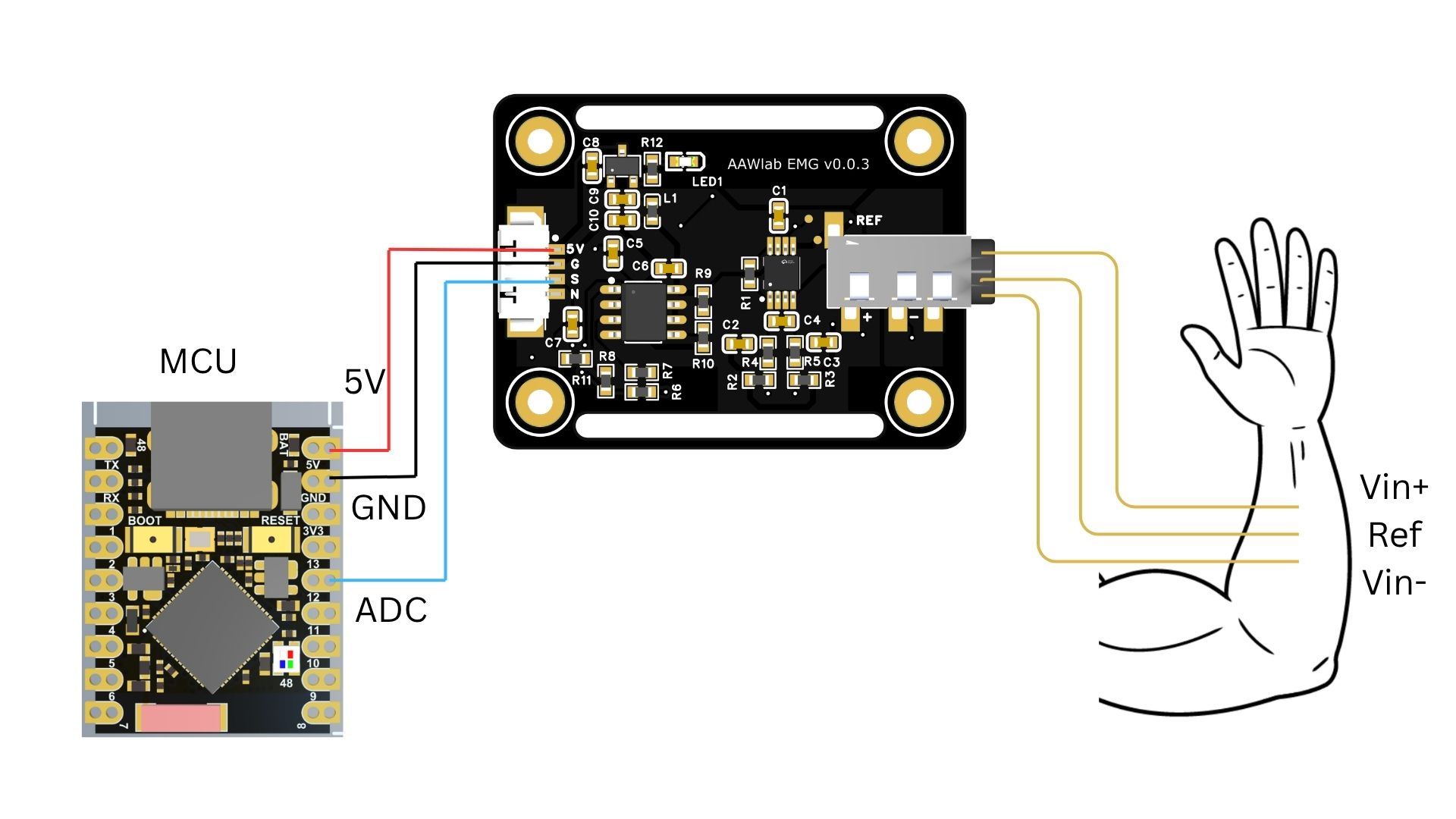
The diagram shows the minimum relationship between the EMG front end, acquisition board, and three electrodes. Final connector names and pin order depend on the specific product version.
First-Test Advice
Section titled “First-Test Advice”- Use wet electrodes first. Do not start with dry electrodes.
- Keep away from laptop chargers, monitors, USB hubs, and large motors.
- Battery power is usually easier for clean first waveforms.
- If the waveform is flat or saturated, read Noise and Flatline.
Success Criteria
Section titled “Success Criteria”When relaxed, the waveform should be relatively quiet. During a hand contraction, the amplitude should clearly increase. That means the minimum EMG acquisition chain is working.