
Dry vs Wet Electrodes
Dry and wet electrodes measure the same thing: a small voltage difference on the skin surface caused by muscle activity. The practical difference is mainly skin-electrode contact impedance, mechanical contact, and convenience.
Quick Choice
Section titled “Quick Choice”| Use case | Better fit |
|---|---|
| Daily exploration, teaching, DIY, wearable prototypes | Dry electrodes |
| Precise scientific experiments or controlled comparisons | Wet electrodes |
| Repeated demos with less preparation and cleanup | Dry electrodes |
| Reference measurements with more stable contact impedance | Wet electrodes |
Wet Electrodes
Section titled “Wet Electrodes”Wet electrodes use gel to lower and stabilize contact impedance. They are useful when you want more repeatable contact conditions, for example in controlled experiments, research measurements, or hardware debugging.
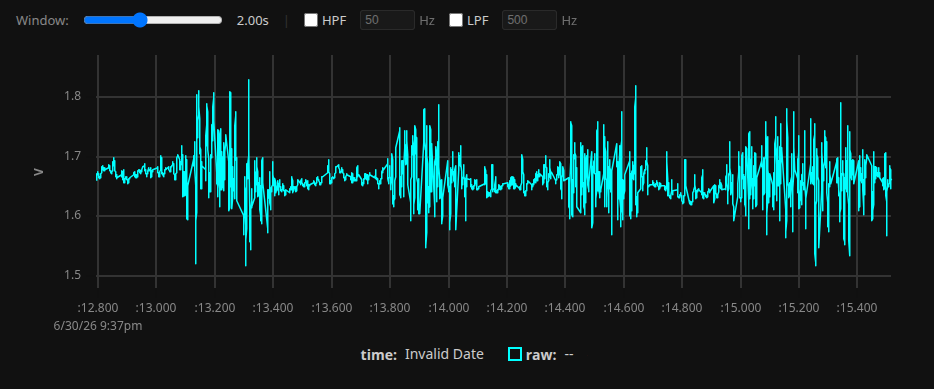
Wet electrodes are not inherently “better”; they simply make the skin contact variable more controlled.
Dry Electrodes
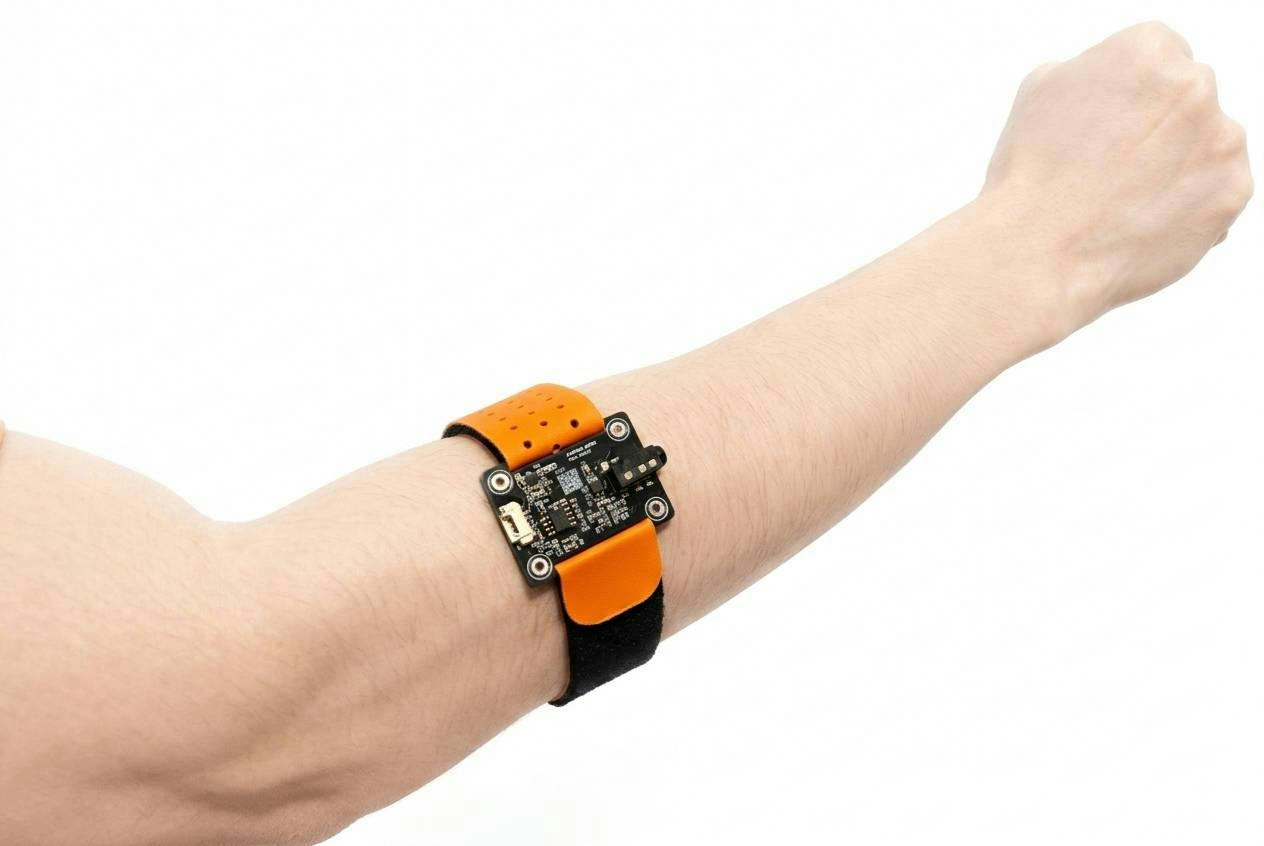
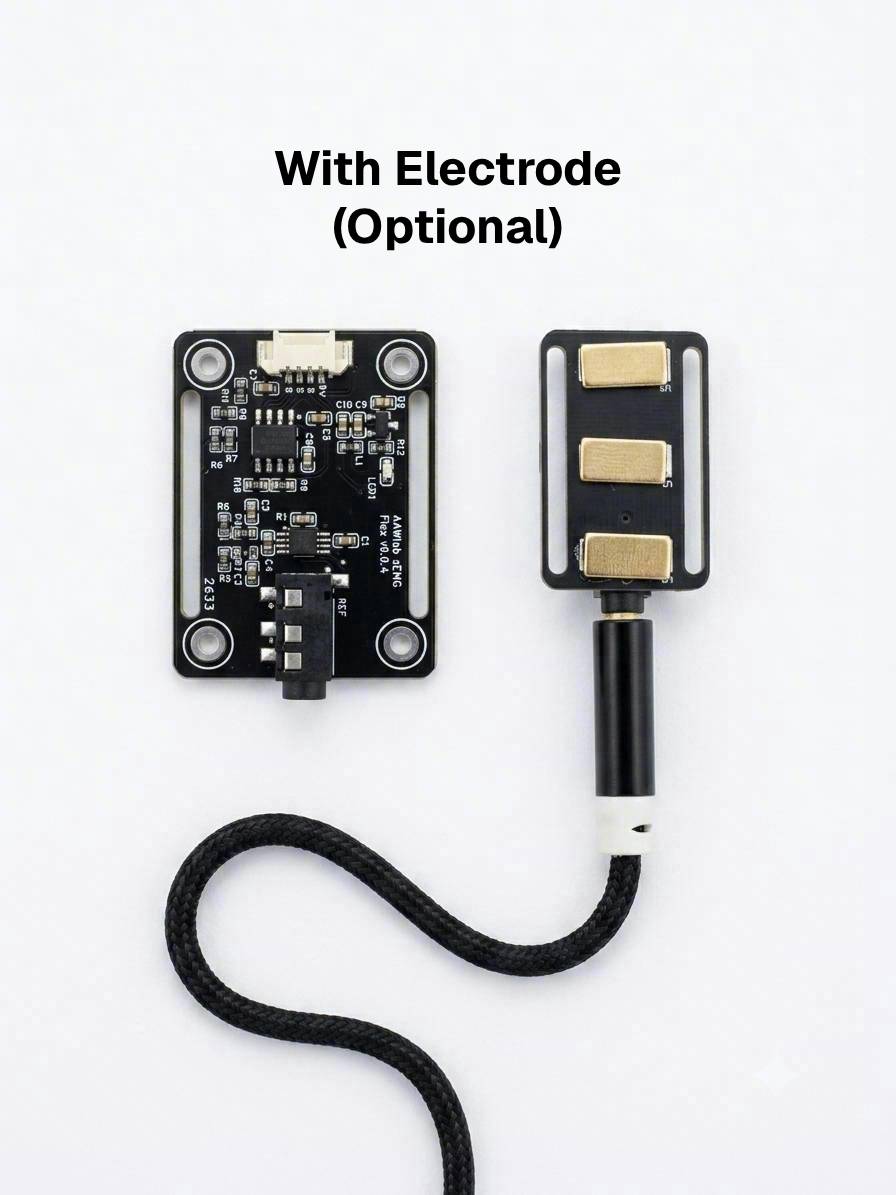
Section titled “Dry Electrodes”Dry electrodes are reusable and easier to integrate into straps, devices, and classroom demos. They are usually the more convenient choice for everyday exploration, teaching, DIY experiments, and wearable prototypes.
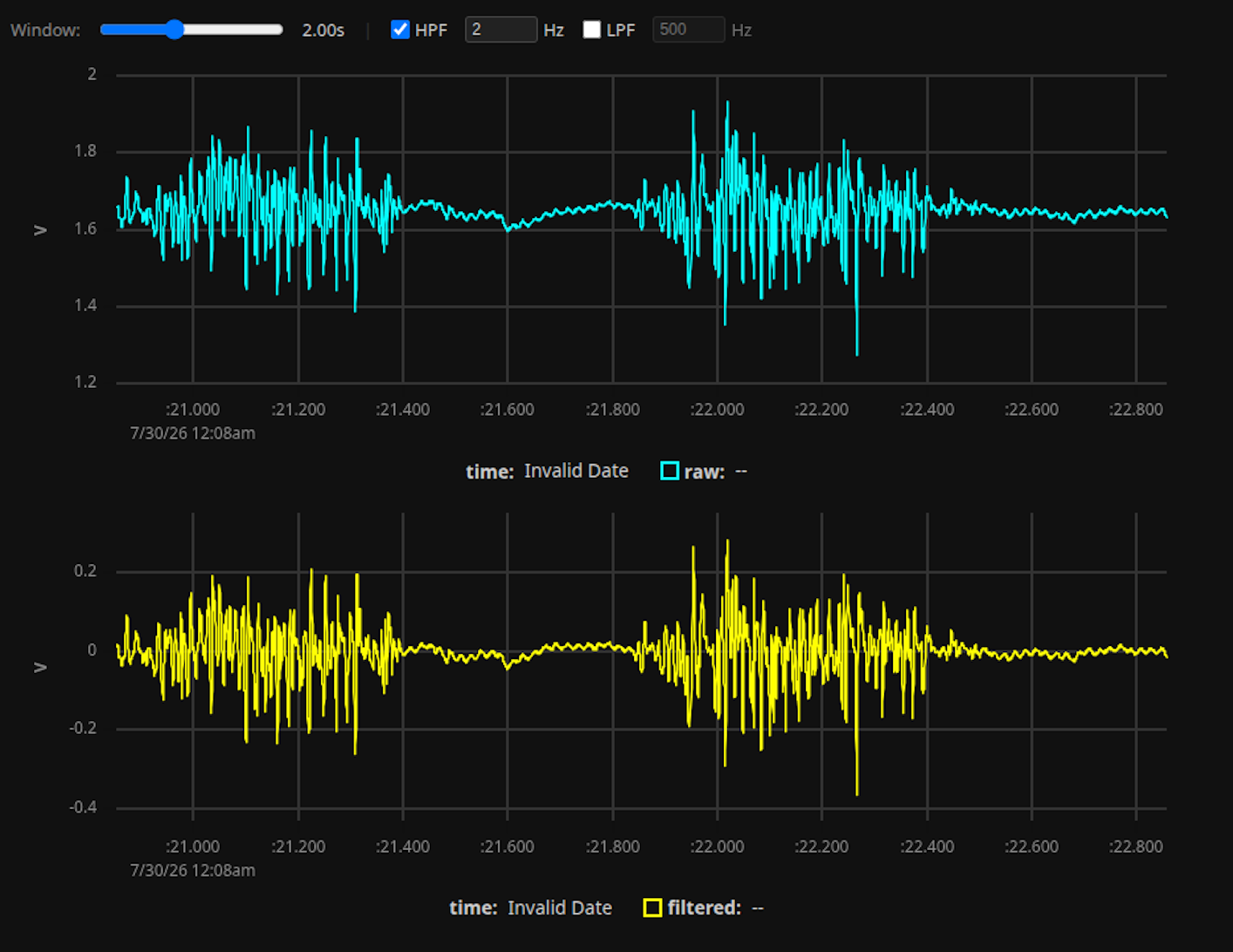
Dry electrodes have higher and more variable contact impedance, so the front end should have suitable input impedance, bias paths, electrode area, and mechanical pressure. With a suitable front end, dry electrodes can show clear action-related EMG changes.
Recommendation
Section titled “Recommendation”Use dry electrodes when convenience and repeated experiments matter. Use wet electrodes when the goal is a more controlled scientific measurement or a reference comparison.
AAW sEMG Flex is designed to make this comparison easier.